3.1 Schema标记与结构化数据
文档摘要
3.1 Schema标记与结构化数据 本节摘要:Schema 标记是一种用 JSON-LD 等格式为网页添加语义信息的结构化数据,相当于给 AI 搜索引擎配了一副"眼镜",让它能清晰识别内容类型、作者、参数、关系等结构。本节讲清 Schema 为什么对 GEO 至关重要(它直接作用在 AI 搜索的"理解"环节),给出十种最常用 Schema 类型的选型表,以及"选类型、写标记、加页面、验证、监控"五步实施流程,并指出三类最常见的实施错误。
3.1 Schema标记与结构化数据
本节摘要:Schema 标记是一种用 JSON-LD 等格式为网页添加语义信息的结构化数据,相当于给 AI 搜索引擎配了一副"眼镜",让它能清晰识别内容类型、作者、参数、关系等结构。本节讲清 Schema 为什么对 GEO 至关重要(它直接作用在 AI 搜索的"理解"环节),给出十种最常用 Schema 类型的选型表,以及"选类型、写标记、加页面、验证、监控"五步实施流程,并指出三类最常见的实施错误。
学习目标
阅读完本节,你应当能够:
- 说清 Schema 标记提升 AI 引用率的原理,指出它作用在 AI 搜索的哪个环节
- 为一篇内容选对 Schema 类型(Article、FAQPage、HowTo、Product 等)
- 跑通结构化数据的验证流程
- 避开必填字段缺失、数据类型错误、过度嵌套三类常见错误
AI 眼里的网页长什么样
想象你写了篇完美的技术教程,信息准确、结构清晰,但 AI 搜索引擎读它时就像个视力不好的人——只能看到模糊轮廓,分不清这是文章、是产品页、还是问答帖,更抓不准作者和发布时间。结果就是它理解错了,引用时把关键信息张冠李戴,或者干脆不选你。
Schema 标记就是给 AI 配的那副眼镜。它在网页里嵌入一段机器可读的语义标签,明明白白告诉 AI:这是一篇技术文章,作者是谁,发布于哪天,讲的是什么主题。有了它,AI 不用猜,直接读结构化字段就行,引用准确率自然上去。
数据上,不少研究报告指向同一个结论:加了结构化数据的页面,在 AI 搜索里的引用率有明显提升,其中 FAQ 类内容在问答场景的曝光提升尤其显著。这不难理解——AI 本来就按"问题到答案"工作,你提前用 Schema 把问答结构标好,等于替它省了归纳的力气。
二、核心原理
2.1 Schema 怎么帮 AI 理解
没有 Schema 时,AI 看到的是一串 HTML 文本,它得自己猜哪段是标题、哪段是作者、哪段是正文。有了 Schema,这些信息变成带类型标签的字段,AI 直接按字段读。
一段典型的 Schema 标记长这样(JSON-LD 格式,context 字段填的是 Schema 官方命名空间):
{ "@context": "Schema 官方命名空间", "@type": "Article", "headline": "GEO 实战指南", "author": { "@type": "Person", "name": "某作者" }, "datePublished": "2025-01-15", "dateModified": "2025-01-20", "description": "提升 AI 搜索引擎引用率的十个技巧" }
AI 读到这段,就清楚地知道:这是一篇文章、标题是什么、作者是谁、何时发布和更新、摘要是啥。它把这些信息直接用于答案生成,引用时不会把作者名搞错、不会用过时的发布时间。context 字段实际填的是 Schema 官方提供的命名空间地址,告诉解析器后续字段的词汇表来自哪里。
2.2 十种常用 Schema 类型
不同内容类型要选不同的 Schema,选错了等于没标。
| Schema 类型 | 适用内容 | GEO 价值 |
|---|---|---|
| Article | 博客、新闻、教程 | 标注标题作者时间,引用准确 |
| TechArticle | 技术文档 | 区分技术内容,AI 优先引用 |
| NewsArticle | 新闻报道 | 标注时效,新闻场景必备 |
| FAQPage | 问答内容 | 直接被 AI 提取为问答 |
| HowTo | 操作指南、步骤教程 | 步骤被原样提取 |
| Product | 电商产品页 | 参数价格评分被 AI 读懂 |
| Review | 评价、测评 | 社会证明被引用 |
| BreadcrumbList | 导航路径 | 帮 AI 理解内容层次 |
| Organization | 公司介绍 | 建立品牌权威信号 |
| Course | 课程、教程系列 | 学习路径被 AI 推荐 |
选型原则是"精确匹配"。一篇技术教程就该用 TechArticle 而不是通用 Article,因为 AI 对技术类查询会优先匹配带 TechArticle 标记的内容。
2.3 Schema 作用在 AI 搜索的哪个环节
回看第 1 章讲的 AI 搜索四环节(理解、检索、综合、生成),Schema 主要作用在"综合"环节——AI 在评估候选内容的可信度和结构化程度时,有 Schema 标记的内容天然得分更高,因为它提供了可机器核对的字段。
三、工程实践要点
3.1 五步实施流程
第一步选类型,按内容类型从上表里挑最匹配的。第二步写标记,用 JSON-LD 格式把必填字段填全。第三步加到页面,通常放在 HTML 的头部或正文里。第四步验证,用主流的结构化数据测试工具跑一遍,确认无报错。第五步监控,跟踪引用率变化和富媒体结果展示情况。
必填字段一定要填全。Article 类至少要 headline、author、datePublished;Product 类至少要 name、offers 或 aggregateRating;FAQPage 至少要 mainEntity 里的 Question 和 acceptedAnswer。缺了必填字段,标记等于无效。
💡 关键直觉:Schema 不是越多越好,而是越准越好。一篇内容用一个最匹配的类型,比堆三个不相关类型有效得多。AI 在交叉验证时,如果发现 Schema 类型和实际内容不符(比如普通文章标成 Product),反而会降低可信度。
3.2 三类常见错误
| 错误类型 | 表现 | 后果 |
|---|---|---|
| 必填字段缺失 | 只写了 @type,没 headline 和 author | 标记无效 |
| 数据类型错误 | 日期写成中文格式而非 ISO 标准 | 解析失败 |
| 过度嵌套 | 作者套组织套地址套地点,层级太深 | 解析困难甚至出错 |
日期格式尤其要注意,必须用 ISO 标准(如 2025-01-15),不能写"2025 年 1 月 15 日"。过度嵌套也要避免,作者关联到组织就够了,再往下套地址、地点,AI 解析起来反而费劲。
3.3 验证和监控
写完标记一定要验证。主流的验证方式是用搜索引擎提供的结构化数据测试工具,输入网址或粘贴代码,它会标出所有错误和警告。报错必须修,警告尽量修。
上线后要持续监控两件事:一是引用率有没有变化(通过在 AI 搜索里抽样查询自己的核心词),二是富媒体结果展示是否正常(结构化数据通过验证后,搜索结果里可能展示星级、时间等富媒体元素,这是额外的曝光)。
⚠️ 常见坑:加了 Schema 就不管了。结构化数据需要随内容更新同步维护——你改了文章标题或发布时间,Schema 里的对应字段也要跟着改,否则 AI 引用的是过时信息。把 Schema 维护纳入内容更新流程,别让它成为一次性工作。
从页面到知识的转换链路
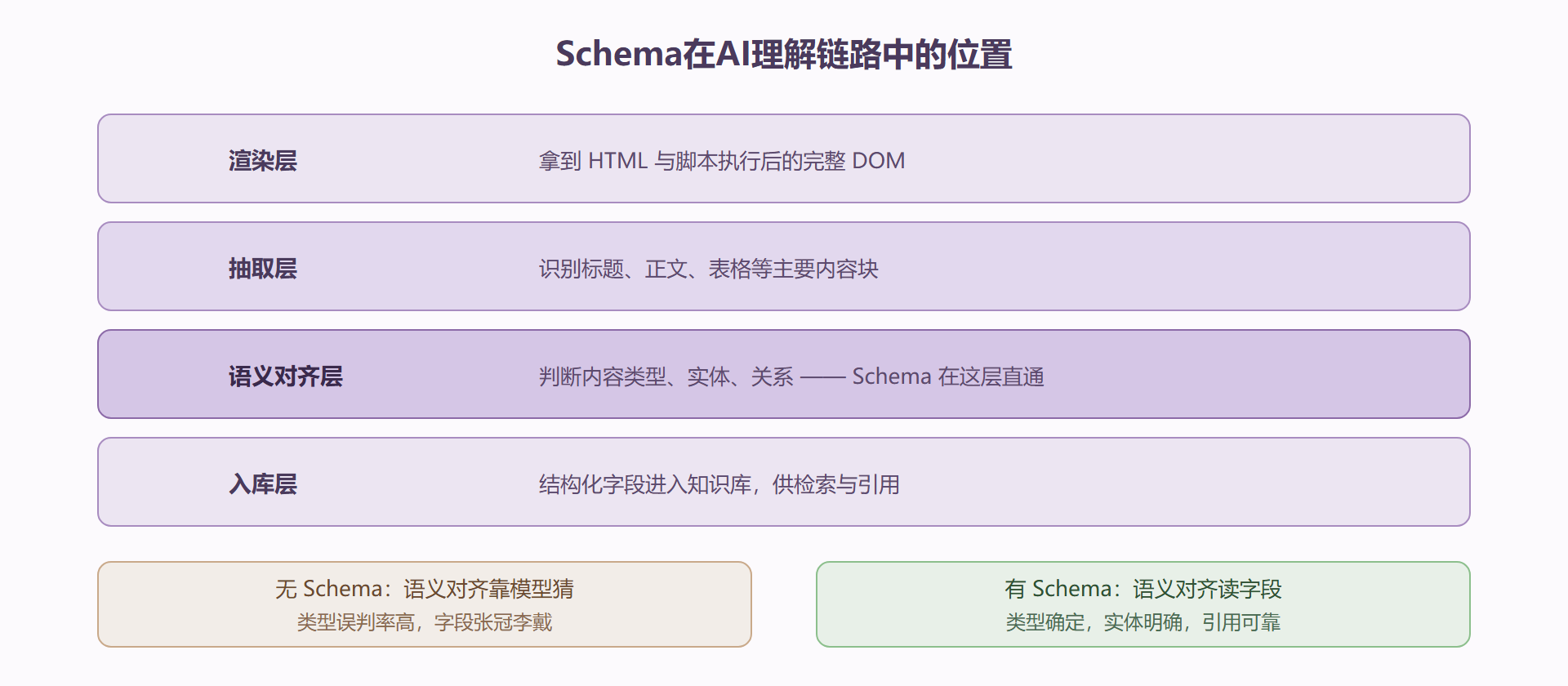
Schema 在整个技术栈里的位置,用一张分层图看更清楚。AI 搜索引擎消化一个页面,要经过渲染、抽取、语义对齐、入库四层。没有 Schema 的页面,每一层都靠猜;有 Schema 的页面,语义对齐这一层几乎是直通的。
图:Schema 在 AI 理解链路中的位置
实施中的深坑细节
比三类常见错误更隐蔽的,是几个实施层面的细节问题。
动态渲染页面:如果核心内容靠脚本执行后才注入 DOM,而爬虫拿到的是空壳,Schema 再标准也没用。判断方法是用工具查看"禁用脚本后的页面源码",关键内容在不在。单页应用尤其要检查这一点,必要时做预渲染或服务端渲染兜底。
多类型共存:一个页面同时是产品和有 FAQ 的评测,可以放多段 JSON-LD,但每段要各司其职、互相用 id 关联而不是胡乱堆叠。乱堆的后果是抽取层把两段的字段搅在一起,反而制造错误。
与可见内容一致:Schema 里写了评分四点八,页面正文却显示四点二,这种不一致会被判定为操纵信号,轻则忽略标记,重则整站降权。原则是标记必须如实反映可见内容。
版本迁移:早期用 Microdata 格式的老站迁移到 JSON-LD 时,记得把旧格式标记彻底移除,两套并存会重复计数,抽取结果混乱。
常见疑问解答
加了 Schema 多久能看到引用变化?
取决于平台的重新抓取周期,快的一两周,慢的要等下一次大规模索引更新。可以主动一点:在主流搜索引擎的站长工具里提交更新,缩短发现延迟。
FAQPage 值得为它单独做页面吗?
如果你的品类问题密集(选购、故障、对比),值得。FAQ 页是结构化密度最高的内容形态之一,但要警惕为凑 Schema 而造空 FAQ——问题必须是真实用户问的,答案必须有信息量,否则得不偿失。
Schema 会不会随 AI 发展变得不重要?
只要 AI 还需要结构化的确定性信号来降低理解成本,Schema 这类机器可读层就有价值。具体标准会演进(词汇表在扩、字段在增),但"给机器留一条直读通道"这个方向不会倒退。
一次协作冲突的教训
结构化数据的落地常常卡在开发和内容团队之间,值得讲一个典型冲突。某站点改版时,开发按设计稿把产品参数区做成了前端渲染的交互组件,视觉效果很好,但渲染后的 DOM 里参数值是脚本填充的,抓取工具拿到的是空标签。Schema 标记倒是加了,可标记里的字段值靠同一段脚本注入——等于整条机器可读通道都依赖脚本执行。三个月后引用数据毫无起色,排查了两周才发现根因。
复盘时双方都有责任:内容团队没在验收清单里写"禁用脚本后参数可见"这条机器视角的验收项,开发团队默认可见性只指人眼可见。修复方案也简单,参数数据改为服务端直出,Schema 同步服务端生成。这个案例的通用教训是:结构化改造的验收必须包含"机器视角"——用工具模拟抓取,而不是只在浏览器里看效果。把这一条加进发布流程,能避开一整类沉默的失效。还有个便宜的保险:每次大改版后,把核心页面清单在结构化数据测试工具里批量过一遍,半小时的成本,换来的是机器视角的全量回归测试,远比等引用数据异常了再回头找原因划算。这类"机器视角回归"的习惯一旦养成,结构化资产的质量就有了制度保障,而不依赖某个工程师的记忆力。这个习惯与前面五步流程里的监控环节首尾相接,构成结构化资产的完整质量闭环。需要强调的是,闭环里的每个环节都不复杂,复杂的是让它们在团队里成为默认动作——把验证嵌进发布流程、把监控写进值班表、把回归测试挂进改版清单,这三件小事做到位,结构化层就再不需要专人救火。
本节要点回顾
- Schema 标记是给 AI 配的眼镜,让机器直接读懂内容类型、作者、参数等结构,不用再猜。
- 十种常用类型按内容精确匹配,TechArticle 给技术文档、FAQPage 给问答、Product 给电商,别用错。
- Schema 作用在 AI 搜索的"综合"环节,提升可信度评估得分。
- 五步实施:选类型、写标记、加页面、验证、监控,必填字段一定要填全。
- 三类常见错误要避开:必填缺失、数据类型错、过度嵌套;上线后要随内容同步更新。
下一节看 RAG 系统怎么从检索侧解决"AI 找不到你"的问题,这是 GEO 的进阶技术投入。