0242.有效的字母异位词
文档摘要
参与本项目 ,贡献其他语言版本的代码,拥抱开源,让更多学习算法的小伙伴们受益! 数组就是简单的哈希表,但是数组的大小可不是无限开辟的 242.有效的字母异位词 力扣题目链接 给定两个字符串 s 和 t ,编写一个函数来判断 t 是否是 s 的字母异位词。 示例 1: 输入: s = "anagram", t = "nagaram" 输出: true 示例 2: 输入: s = "rat", t = "car" 输出: false 说明: 你可以假设字符串只包含小写字母。 算法公开课 《代码随想录》算法视频公开课:学透哈希表,数组使用有技巧!Leetcode:242.有效的字母异位词,相信结合视频再看本篇题解,更有助于大家对本题的理解。

参与本项目,贡献其他语言版本的代码,拥抱开源,让更多学习算法的小伙伴们受益!
数组就是简单的哈希表,但是数组的大小可不是无限开辟的
242.有效的字母异位词
给定两个字符串 s 和 t ,编写一个函数来判断 t 是否是 s 的字母异位词。
示例 1:
输入: s = "anagram", t = "nagaram"
输出: true
示例 2:
输入: s = "rat", t = "car"
输出: false
说明:
你可以假设字符串只包含小写字母。
算法公开课
《代码随想录》算法视频公开课:,相信结合视频再看本篇题解,更有助于大家对本题的理解。
思路
先看暴力的解法,两层for循环,同时还要记录字符是否重复出现,很明显时间复杂度是 O(n^2)。
暴力的方法这里就不做介绍了,直接看一下有没有更优的方式。
数组其实就是一个简单哈希表,而且这道题目中字符串只有小写字符,那么就可以定义一个数组,来记录字符串s里字符出现的次数。
如果对哈希表的理论基础关于数组,set,map不了解的话可以看这篇:关于哈希表,你该了解这些!
需要定义一个多大的数组呢,定一个数组叫做record,大小为26 就可以了,初始化为0,因为字符a到字符z的ASCII也是26个连续的数值。
为了方便举例,判断一下字符串s= "aee", t = "eae"。
操作动画如下:
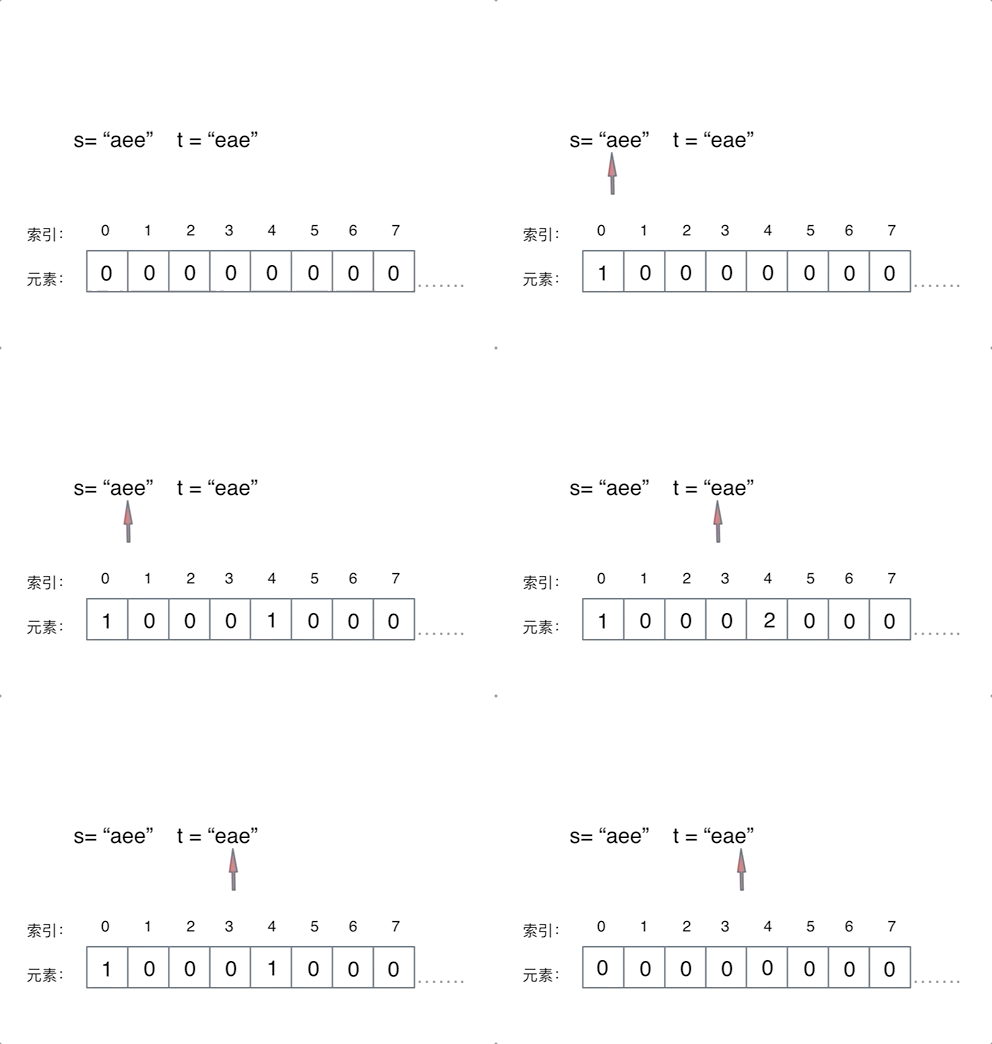
定义一个数组叫做record用来上记录字符串s里字符出现的次数。
需要把字符映射到数组也就是哈希表的索引下标上,因为字符a到字符z的ASCII是26个连续的数值,所以字符a映射为下标0,相应的字符z映射为下标25。
再遍历 字符串s的时候,只需要将 s[i] - ‘a’ 所在的元素做+1 操作即可,并不需要记住字符a的ASCII,只要求出一个相对数值就可以了。 这样就将字符串s中字符出现的次数,统计出来了。
那看一下如何检查字符串t中是否出现了这些字符,同样在遍历字符串t的时候,对t中出现的字符映射哈希表索引上的数值再做-1的操作。
那么最后检查一下,record数组如果有的元素不为零0,说明字符串s和t一定是谁多了字符或者谁少了字符,return false。
最后如果record数组所有元素都为零0,说明字符串s和t是字母异位词,return true。
时间复杂度为O(n),空间上因为定义是的一个常量大小的辅助数组,所以空间复杂度为O(1)。
C++ 代码如下:
class Solution { public: bool isAnagram(string s, string t) { int record[26] = {0}; for (int i = 0; i < s.size(); i++) { // 并不需要记住字符a的ASCII,只要求出一个相对数值就可以了 record[s[i] - 'a']++; } for (int i = 0; i < t.size(); i++) { record[t[i] - 'a']--; } for (int i = 0; i < 26; i++) { if (record[i] != 0) { // record数组如果有的元素不为零0,说明字符串s和t 一定是谁多了字符或者谁少了字符。 return false; } } // record数组所有元素都为零0,说明字符串s和t是字母异位词 return true; } };
- 时间复杂度: O(n)
- 空间复杂度: O(1)
其他语言版本
Java:
/** * 242. 有效的字母异位词 字典解法 * 时间复杂度O(m+n) 空间复杂度O(1) */ class Solution { public boolean isAnagram(String s, String t) { int[] record = new int[26]; for (int i = 0; i < s.length(); i++) { record[s.charAt(i) - 'a']++; // 并不需要记住字符a的ASCII,只要求出一个相对数值就可以了 } for (int i = 0; i < t.length(); i++) { record[t.charAt(i) - 'a']--; } for (int count: record) { if (count != 0) { // record数组如果有的元素不为零0,说明字符串s和t 一定是谁多了字符或者谁少了字符。 return false; } } return true; // record数组所有元素都为零0,说明字符串s和t是字母异位词 } }
Python:
class Solution: def isAnagram(self, s: str, t: str) -> bool: record = [0] * 26 for i in s: #并不需要记住字符a的ASCII,只要求出一个相对数值就可以了 record[ord(i) - ord("a")] += 1 for i in t: record[ord(i) - ord("a")] -= 1 for i in range(26): if record[i] != 0: #record数组如果有的元素不为零0,说明字符串s和t 一定是谁多了字符或者谁少了字符。 return False return True
Python写法二(没有使用数组作为哈希表,只是介绍defaultdict这样一种解题思路):
class Solution: def isAnagram(self, s: str, t: str) -> bool: from collections import defaultdict s_dict = defaultdict(int) t_dict = defaultdict(int) for x in s: s_dict[x] += 1 for x in t: t_dict[x] += 1 return s_dict == t_dict
Python写法三(没有使用数组作为哈希表,只是介绍Counter这种更方便的解题思路):
class Solution(object): def isAnagram(self, s: str, t: str) -> bool: from collections import Counter a_count = Counter(s) b_count = Counter(t) return a_count == b_count
Go:
func isAnagram(s string, t string) bool { record := [26]int{} for _, r := range s { record[r-rune('a')]++ } for _, r := range t { record[r-rune('a')]-- } return record == [26]int{} // record数组如果有的元素不为零0,说明字符串s和t 一定是谁多了字符或者谁少了字符。 }
Go 写法二(只对字符串遍历一次)
func isAnagram(s string, t string) bool { if len(s) != len(t) { return false } records := [26]int{} for index := 0; index < len(s); index++ { if s[index] == t[index] { continue } sCharIndex := s[index] - 'a' records[sCharIndex]++ tCharIndex := t[index] - 'a' records[tCharIndex]-- } for _, record := range records { if record != 0 { return false } } return true }
JavaScript:
/** * @param {string} s * @param {string} t * @return {boolean} */ var isAnagram = function(s, t) { if(s.length !== t.length) return false; const resSet = new Array(26).fill(0); const base = "a".charCodeAt(); for(const i of s) { resSet[i.charCodeAt() - base]++; } for(const i of t) { if(!resSet[i.charCodeAt() - base]) return false; resSet[i.charCodeAt() - base]--; } return true; }; var isAnagram = function(s, t) { if(s.length !== t.length) return false; let char_count = new Map(); for(let item of s) { char_count.set(item, (char_count.get(item) || 0) + 1) ; } for(let item of t) { if(!char_count.get(item)) return false; char_count.set(item, char_count.get(item)-1); } return true; };
TypeScript:
function isAnagram(s: string, t: string): boolean { if (s.length !== t.length) return false; let helperArr: number[] = new Array(26).fill(0); let pivot: number = 'a'.charCodeAt(0); for (let i = 0, length = s.length; i < length; i++) { helperArr[s.charCodeAt(i) - pivot]++; helperArr[t.charCodeAt(i) - pivot]--; } return helperArr.every(i => i === 0); };
Swift:
func isAnagram(_ s: String, _ t: String) -> Bool { if s.count != t.count { return false } var record = Array(repeating: 0, count: 26) let aUnicodeScalar = "a".unicodeScalars.first!.value for c in s.unicodeScalars { record[Int(c.value - aUnicodeScalar)] += 1 } for c in t.unicodeScalars { record[Int(c.value - aUnicodeScalar)] -= 1 } for value in record { if value != 0 { return false } } return true }
PHP:
class Solution { /** * @param String $s * @param String $t * @return Boolean */ function isAnagram($s, $t) { if (strlen($s) != strlen($t)) { return false; } $table = []; for ($i = 0; $i < strlen($s); $i++) { if (!isset($table[$s[$i]])) { $table[$s[$i]] = 1; } else { $table[$s[$i]]++; } if (!isset($table[$t[$i]])) { $table[$t[$i]] = -1; } else { $table[$t[$i]]--; } } foreach ($table as $record) { if ($record != 0) { return false; } } return true; } }
Rust:
impl Solution { pub fn is_anagram(s: String, t: String) -> bool { let mut record = vec![0; 26]; let baseChar = 'a'; for byte in s.bytes() { record[byte as usize - baseChar as usize] += 1; } for byte in t.bytes() { record[byte as usize - baseChar as usize] -= 1; } record.iter().filter(|x| **x != 0).count() == 0 } }
Scala:
object Solution { def isAnagram(s: String, t: String): Boolean = { // 如果两个字符串的长度不等,直接返回false if (s.length != t.length) return false val record = new Array[Int](26) // 记录每个单词出现了多少次 // 遍历字符串,对于s字符串单词对应的记录+=1,t字符串对应的记录-=1 for (i <- 0 until s.length) { record(s(i) - 97) += 1 record(t(i) - 97) -= 1 } // 如果不等于则直接返回false for (i <- 0 until 26) { if (record(i) != 0) { return false } } // 如果前面不返回false,说明匹配成功,返回true,return可以省略 true } }
C#:
public bool IsAnagram(string s, string t) { int sl=s.Length,tl=t.Length; if(sl!=tl) return false; int[] a = new int[26]; for(int i = 0; i < sl; i++){ a[s[i] - 'a']++; a[t[i] - 'a']--; } foreach (int i in a) { if (i != 0) return false; } return true; }
C
bool isAnagram(char* s, char* t) { int len1 = strlen(s), len2 = strlen(t); if (len1 != len2) { return false; } int map1[26] = {0}, map2[26] = {0}; for (int i = 0; i < len1; i++) { map1[s[i] - 'a'] += 1; map2[t[i] - 'a'] += 1; } for (int i = 0; i < 26; i++) { if (map1[i] != map2[i]) { return false; } } return true; }
相关题目
